
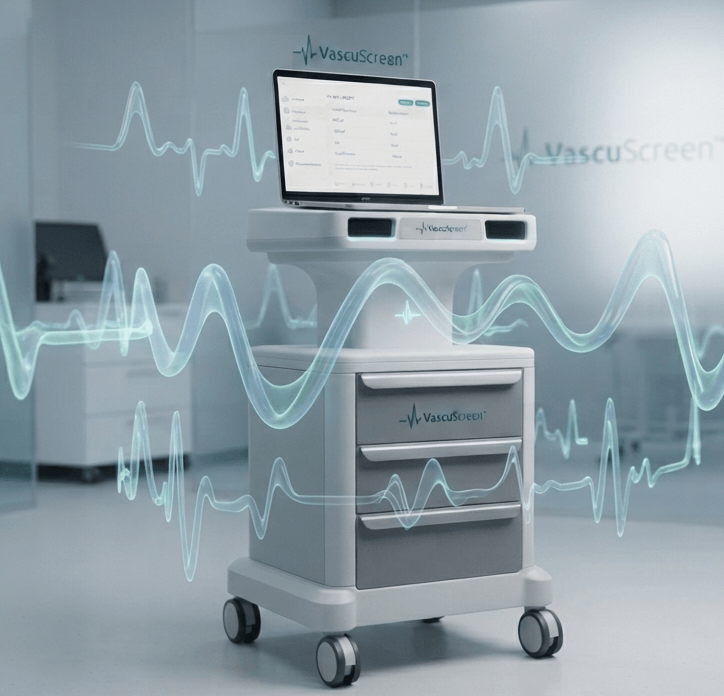
The autonomic nervous system regulates heart rhythm, circulation, blood pressure adaptation, and stress response. The Vascuscreen System evaluates physiologic markers of autonomic function through structured preventive vascular screening.
By combining vascular, autonomic, and cardiometabolic markers into a single platform, Vascuscreen provides measurable insights, structured interpretation, and scalable implementation across practices, corporate wellness programs, and union health initiatives.
Our team is ready to help you learn more about the VascuScreen System and answer your questions.
Vascular screening is a structured, non-invasive assessment that evaluates physiologic markers of blood flow, arterial function, and autonomic regulation. It is designed to provide objective insight into circulation patterns and overall vascular function.
As part of comprehensive preventive vascular screening, these assessments help identify early signs of circulation-related trends and may inform proactive wellness discussions when appropriate.
Vascular screenings are valuable for individuals and organizations seeking measurable insight into circulatory and autonomic performance. They provide objective data that supports informed health awareness and longitudinal tracking.
Within structured proactive health screening programs, vascular screening can help establish baselines, monitor changes over time, and support strategic preventive planning without replacing formal medical diagnosis.
No. Vascuscreen is a non-invasive health screening platform and does not provide a medical diagnosis. It supports structured Clinical Wellness Interpretation when appropriate.
The system is designed for awareness and longitudinal monitoring, reinforcing responsible proactive health screening without replacing physician evaluation or treatment.
The primary vascular screening benefits include objective physiologic data, repeatable measurement models, and structured patient engagement opportunities.
For growth-focused organizations, preventive vascular screening may also support recurring revenue models and expanded preventive service offerings without upfront capital expenditure.
Healthcare practices, provider networks, wellness centers, and enterprise organizations may implement preventive vascular screening as part of broader preventive strategies.
Organizations seeking scalable non-invasive health screening solutions that support structured preventive workflows and early risk pattern detection may find this model aligned with long-term operational and clinical objectives.
Vascular screening is conducted through a structured, technology-assisted assessment that evaluates physiologic markers associated with vascular and autonomic systems. Sensors and automated measurement tools collect objective data during a guided screening session.
In comprehensive preventive vascular screening, results are compiled into structured reports that support Clinical Wellness Interpretation and proactive health awareness within an appropriate care framework.
A typical vascular screening session is designed to be time-efficient and is often completed within a single appointment. The duration may vary depending on workflow and program structure.
Because it is a non-invasive health screening, the process is streamlined for integration into clinical practices, corporate wellness environments, and structured preventive programs without significant disruption to daily operations.